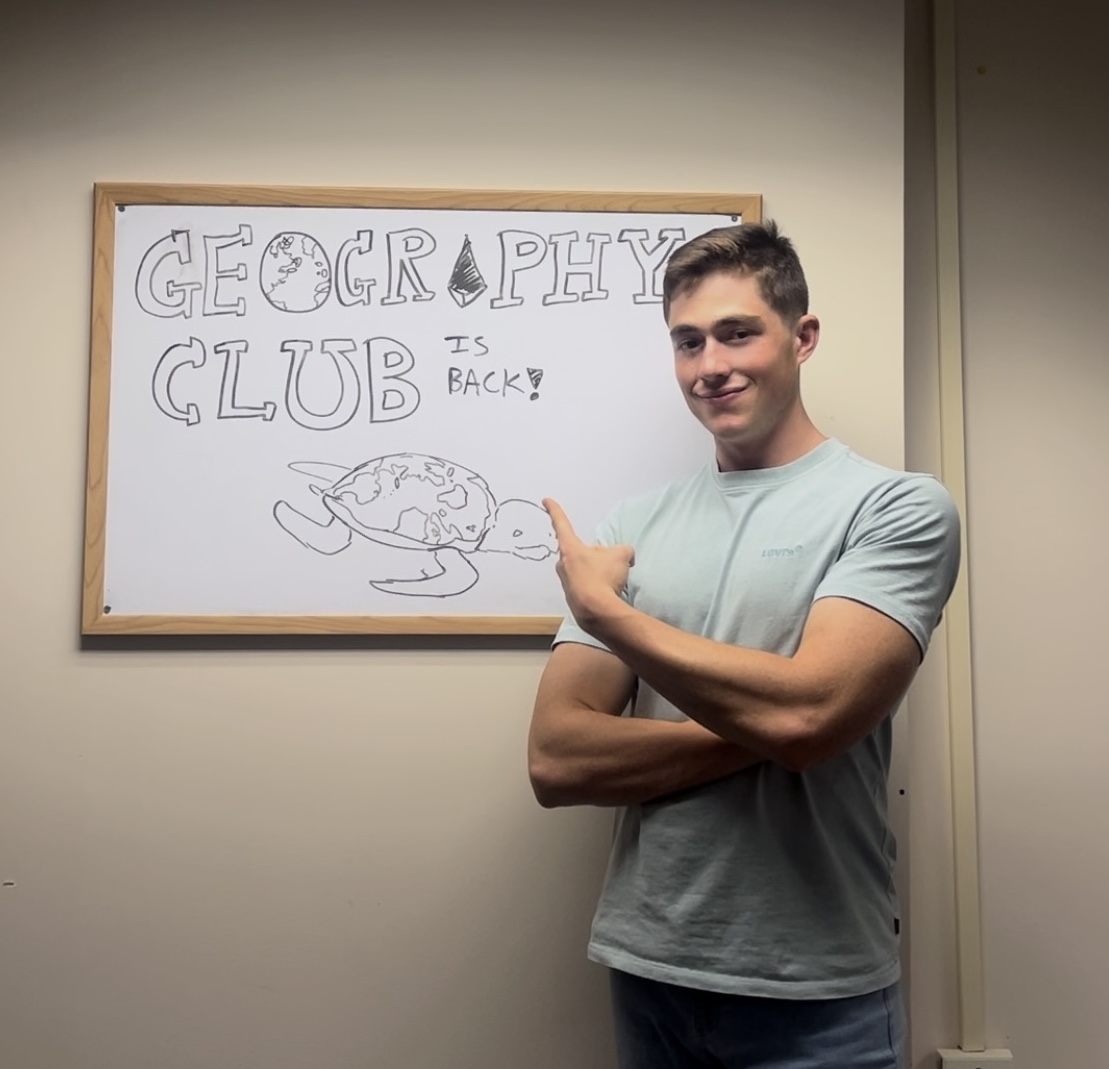
Joseph Massaro, ENSP-Land Use & GIS '24, MS GEOINT '27
Return to UMD: Building Community and a Career
After reviving the Geography Club as an undergraduate, the 2024 graduate returned to UMD for a master’s in geospatial intelligence while undergoing treatment for lymphoma.
When Joseph Massaro first came to the University of Maryland, he wasn’t sure what he wanted to study.
A Maryland native with family ties to the Eastern Shore and Washington, D.C., Massaro had always been interested in the natural world, history, architecture and exploring new places. But it was an opportunity outside the classroom that helped point him toward geography.
As a freshman, Massaro joined the Maryland Air National Guard and chose surveying. The work introduced him to GIS and gave him a glimpse of how maps and geographic data could be used to understand the world around him.
That experience eventually led him to UMD’s Environmental Science and Policy Program, where he concentrated in land use and added a minor in geographic information science. As he took more courses in the Department of Geographical Sciences (GEOG), he became increasingly drawn to the field.
“You can combine a lot of different interests,” he said. “There’s a lot of diversity within the field [of geography], so you’re not stuck doing one specific thing.”
Massaro graduated in December 2024. But he wasn’t ready to leave the department behind.
He returned the following spring to begin a master’s degree in geospatial intelligence, taking one course at a time while working full time. The program has allowed him to build on the skills he developed as an undergraduate, including programming, remote sensing and GIS.
“I have directly applied things I’ve learned in class already,” he said. He pointed to GEOG 685: Machine Learning and Data Mining as the course he has applied most directly, along with GEOG 688I: Imagery Intelligence.
Reviving the Geography Club
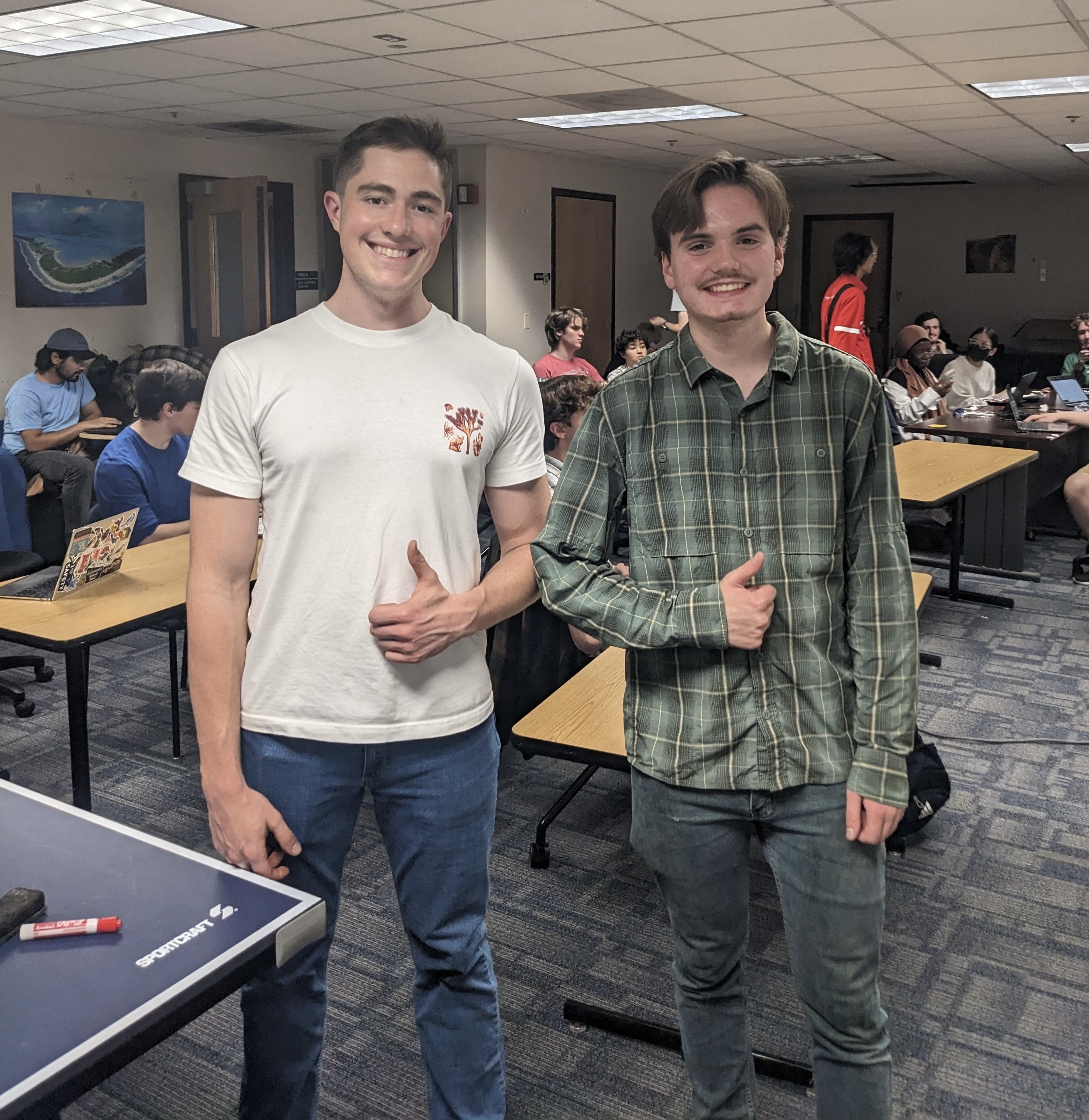
Joseph Massaro (left) and Teddy Jorgensen in the Undergraduate Lounge
One of Massaro’s most lasting contributions as an undergraduate was helping revive the Geography Club.
The club had been inactive during the COVID-19 pandemic, and previous attempts to restart it had stalled. Massaro and fellow student Teddy Jorgensen decided to try again in 2023.
They worked through the university’s administrative requirements, recovered the club’s finance and social media accounts, rewrote its constitution and recruited members and officers.
“Our focus was to bring it back and have it viable,” Massaro said.
They also wanted to create a foundation that would allow the club to continue after they graduated. By fall 2024, the club had become a regular part of student life, with GeoGuessr tournaments, trivia, game nights and other events.
For Massaro, the goal was about more than activities. Geography students were scattered across different majors and concentrations, and he wanted to create a space where they could meet one another.
“I felt like there was kind of a missing community,” he said.
The club continued after he graduated, with other students taking over leadership. Massaro remained interested in attending meetings and helping when he could.
A Challenging Year
His return to UMD also came during one of the most difficult periods of his life.
In fall 2025, while working and taking graduate classes, Massaro was diagnosed with stage 4 diffuse large B-cell lymphoma, an aggressive form of non-Hodgkin lymphoma.
He began chemotherapy later that year and continued treatment into spring 2026. His professors and graduate advisor, Ruibo Han, supported him throughout the process and made clear he could take time away from the program if needed.
Massaro chose to continue.
“I think I want to try to do it through this, and it worked,” he said.
Keeping up with work and school gave him structure during treatment. His classes were online, and professors worked with him when he needed flexibility. At work, arrangements were also made so he could continue contributing when he was able.
“If I had just stayed in bed, or in the hospital or at home, it would have made me more depressed,” he said. “The fact that I knew I was working and still working toward something was a good motivation. That definitely ended up helping me mentally.”
By spring, treatment had produced a complete metabolic response, with no evidence of active cancer. Just two weeks after his final chemotherapy treatment, Massaro volunteered at Maryland Day, helping take down the GEOG table. He continues to recover physically but says he feels better each month.
Charting the Next Chapter
Now 26, Massaro is balancing graduate school with his work as a geospatial data scientist. He recently bought a house in the region and takes evening graduate classes.
His work involves machine learning, statistics and imagery analysis.
He is interested in remote sensing applications in agriculture and other areas of land cover, particularly drone imagery. He plans to take a drone-focused course next year.
“I think I’m still exploring,” he said. “My dream job is not necessarily specific but would ideally include drone imagery and lidar and or utilize LLM and machine learning or computer vision models.”
Image courtesy of Joseph Massaro