

Introduction to Guilford Woods
Stephen Prince
Version 2.0
June 6, 2026
Contents
1. Overview
1.1. Guilford Woods is a natural area
1.2.The forest provides important ecosystem services.
1.2.1. Wetlands and flood control
1.2.2. Temperature moderation.
1.2.3. Carbon sequestered in biomass
1.3. The location of the forest is important
1.4. People need forest
2. Biodiversity
2.1. Species diversity
2.2. Habitat diversity
2.2.1. Woodland
2.2.1.1. Tree canopy cover
2.2.1.2. Tree canopy heights
2.2.2. Other habitats
2.2.3 Soils
3. Non-material benefits
4. Maps
5. Diagrams
6. Photos
For additional information see Friends of Guilford Woods.
1. Overview of Guilford Woods
1.1. Guilford Woods is a natural area
The Woods and its Creek occupy about 15 acres to the west of Guilford Dr. and south of Campus Drive. At this time, approximately 13 acres are owned by the University and 4.5 acres by Gilbane Development Company. Smaller parts are owned by four places of worship and some private houses that back onto the main area of Woods. Most of these have some woodland similar to the UMD area.
The Woods provide diverse forest habitats that support high biodiversity. 172 species have been found in the Woods so far (Table 1)
The current lists include birds (e.g., pileated woodpeckers, barred owls, red-shouldered hawks), mammals (e.g., bats, raccoons, deer, foxes), insects, reptiles and amphibians, trees (Table 1), shrubs and herbaceous plants, a long list of fungi, and at least 26 species of native trees. The Creek has aquatic insects and other small invertebrates typical of the “flashy” flow of urban waterways. A recent survey by University of Maryland researchers discovered a species of small carnivorous worm in Guilford Creek that is new to science. The locations of larger “specimen” trees are mapped on the NRI map for 2019 and its Specimen Tree table (See Maps in Appendix, Chapter 6.1). The complete biodiversity is not fully known. Few species are invasive aliens, as defined in the Maryland Technical Manual. Simple management can control some more troublesome aliens such as English Ivy, Japanese honeysuckle and Wisteria.
In any case, many aliens, other than the vines listed above, have adapted to the woodland habitat and contribute to, or even replace, ecosystem services formerly provided by the native flora.
|
Tree List for Guilford Woods |
|
|
|
Table 1. Tree species in Guilford Woods (From Friends of Guilford Woods)
The Woods enhance biodiversity well beyond its boundaries. It is a refuge - home base - for species that are seen on the University campus and in the neighborhoods surrounding the Woods. For example, bats, red-shouldered hawks, and owls fly out from the Woods over the neighborhood. These and other species may be lost as their forest refuge were to be diminished.
Furthermore, forests such as Guilford Woods perform many of the ecological services provided by much older forests (for an explanation of the concept of “Ecological Services” see pages 6–14 in Millennial Ecosystem Assessment Volume 1, “Ecosystems and Human Well-Being”, 2005 )
While the Woods as a whole do not fit the Maryland criteria for Old Growth status (e.g. >150 yrs), some of the oldest trees must be over 150 years, dating back to around the time of the Civil War. Amongst other large trees, there is a 90-year-old sweet gum, a 135-year-old white oak, and several 150-year-old tulip trees.
1.2. The forest provides important ecosystem services
1.2.1. Wetlands and flood control
Rainfall over the Woods is one source of Guilford Creek, but the main one is from piped stormwater from impervious surfaces outside the Woods (Fig. 1, 2).
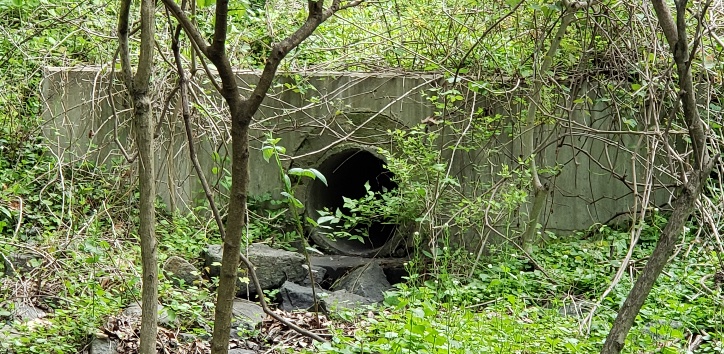
Figure 1. The main source of water in Guilford Creek is stormwater from roads and parking lots. This 5 ft outfall drains impervious surfaces to the north and east of the Woods.
Water leaves the Woods by evaporation, infiltration into the soil, runoff, flow below the surface, and via Guilford Creek (Fig 2).
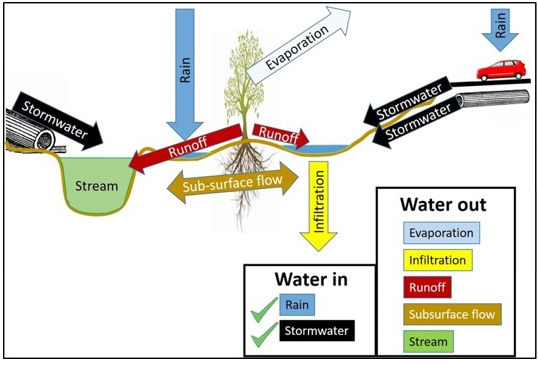
Figure 2. Water in and outflows in Guilford Woods.
The stormwater pipes terminate at the margins of the Woods, at significant distances from the Creek. Rainwater and runoff largely infiltrate before reaching the Creek. Many small depressions along the slope impede the flow forming small, temporary pools, often with wetlands thus providing varieties of habitat (Fig.3).
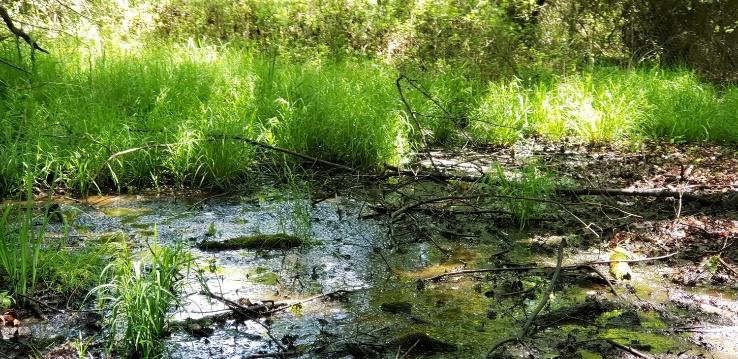
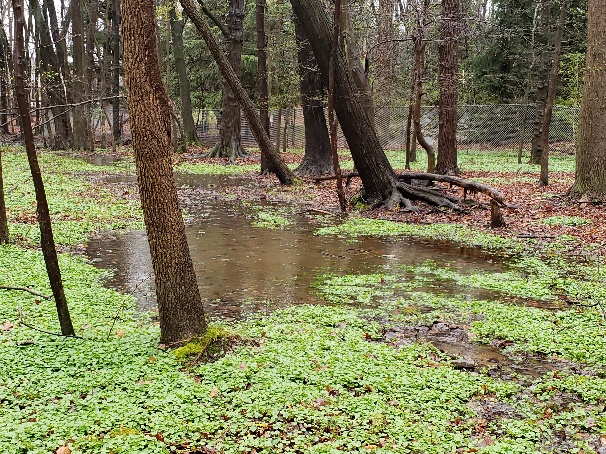
Figure 3. Temporary pools formed by surface runoff from the margins of the Woods.
In the past, the Woods have been treated as part of the public stormwater system, used for disposal of runoff from surrounding areas. Stormwater pipes enter the Woods (Fig.4) that drain: the east side of Adelphi Road and buildings along it, Campus Drive, parts of the UMGC Inn and 
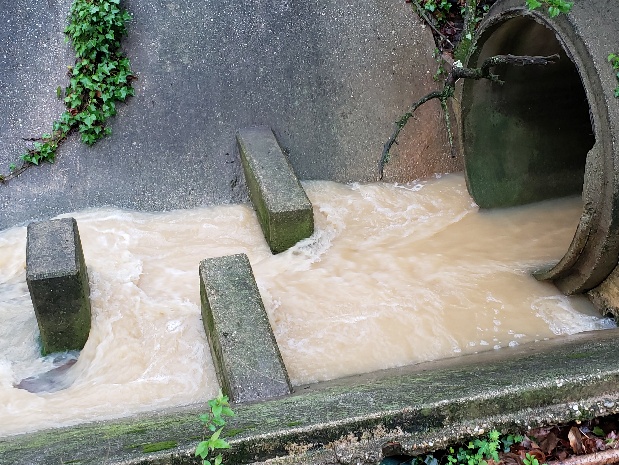
Figure 4. Discharge of runoff from impervious surfaces further up in the watershed via the 5 ft outfall into Guilford Run which can lead to rapid rise in water level in Guilford Creek.
Figure 5. Discharge of runoff via the outfall into Guilford Run leads to flooding in Calvert Woods, ¾ of a mile downstream.
During periods of significant rainfall, the water level in the Creek can rise very fast, within hours. The high flow however, is short lived, falling to pre-storm levels a few days later. Thus the Creek is a very different habitat for fish, insects and other aquatic life than in streams with permanent flow.
During periods of extremely heavy rain, flow in the Creek becomes so large that residential communities downstream of Guilford Woods can experience intermittent flooding (Fig. 5). Prince George’s County Department of Environment has named Guilford Woods as a site in need of stormwater mitigation.
1.2.2. Temperature moderation
The forest moderates the “heat island” of the University campus, reducing elevated and, frequently, unhealthy air temperature. This is particularly a problem on artificial turf which is often several degrees higher temperature than natural grass. A tragic illustration of the effect on human health is the death of a student football player from heat exhaustion in 2021. The Mall at Prince George’s also suffers from the heat island effect. Fig.6 shows that the temperature can be 102˚F on the Mall, while it is less than 90˚F in the Woods. This heat island not only leads to less healthy conditions for humans but also natural biota. And there are many related problems, for example, peak electricity use for building cooling.
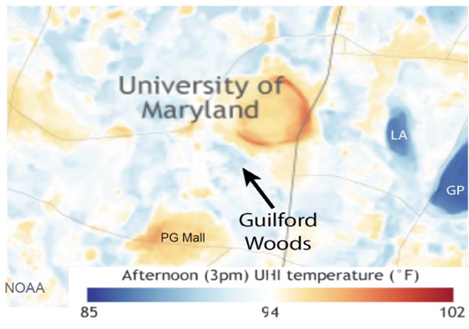
Figure 6. Map showing surface temperature on the University campus and, to the south, the Mall at Prince Georges. Source: https://www.climate.gov/news-features/features/detailed-maps-urban-heat-island-effects-washington-dc-and-baltimore.
1.2.3. Carbon sequestered in biomass
Recent advances in satellite remote sensing using LiDAR have enabled estimates of current forest biomass, height and canopy cover. An analysis of those data for Guilford Woods, the University main campus, and the University Golf course indicate the range of conditions currently in natural and grassy parkland in the area (Tables 2 and 3 and Figs 7 and 8).
The Woods are estimated to consist of a total of 1,949Mg of stored carbon with a net 716 t CO2 equivalents added annually in perpetuity (calculated from Hurtt et al. 2019, https://doi.org/10.3334/ORNLDAAC/1660) the carbon dioxide equivalent of biomass is the amount of CO2 released by burning that would have the same greenhouse heating effect.)
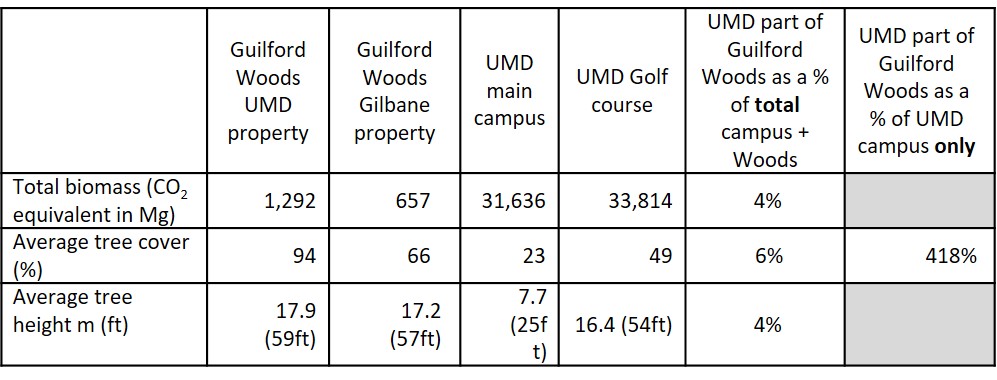 Table 2. Forest biomass, tree cover and height averages for Guilford Woods, UMD main campus, and golf course.
Data sources: Biomass, height and cover: Dubayah, R.O., A. Swatantran, W. Huang, L. Duncanson, K. Johnson, H. Tang, J.O. Dunne, and G.C. Hurtt. 2018. LiDAR Derived Biomass, Canopy Height and Cover for Tri-State (MD, PA, DE) Region, V2. ORNL DAAC, Oak Ridge, Tennessee, USA. https://doi.org/10.3334/ORNLDAAC/1538. Property boundaries: https://imap.maryland.gov/Pages/data.aspx, https://gisdata.pgplanning.org/data/ShapeFile/Property_Py.zip.)
Table 3. Biomass, cover and height of the larger trees. Grid cells 30 x 30m. For data sources see Table 2.
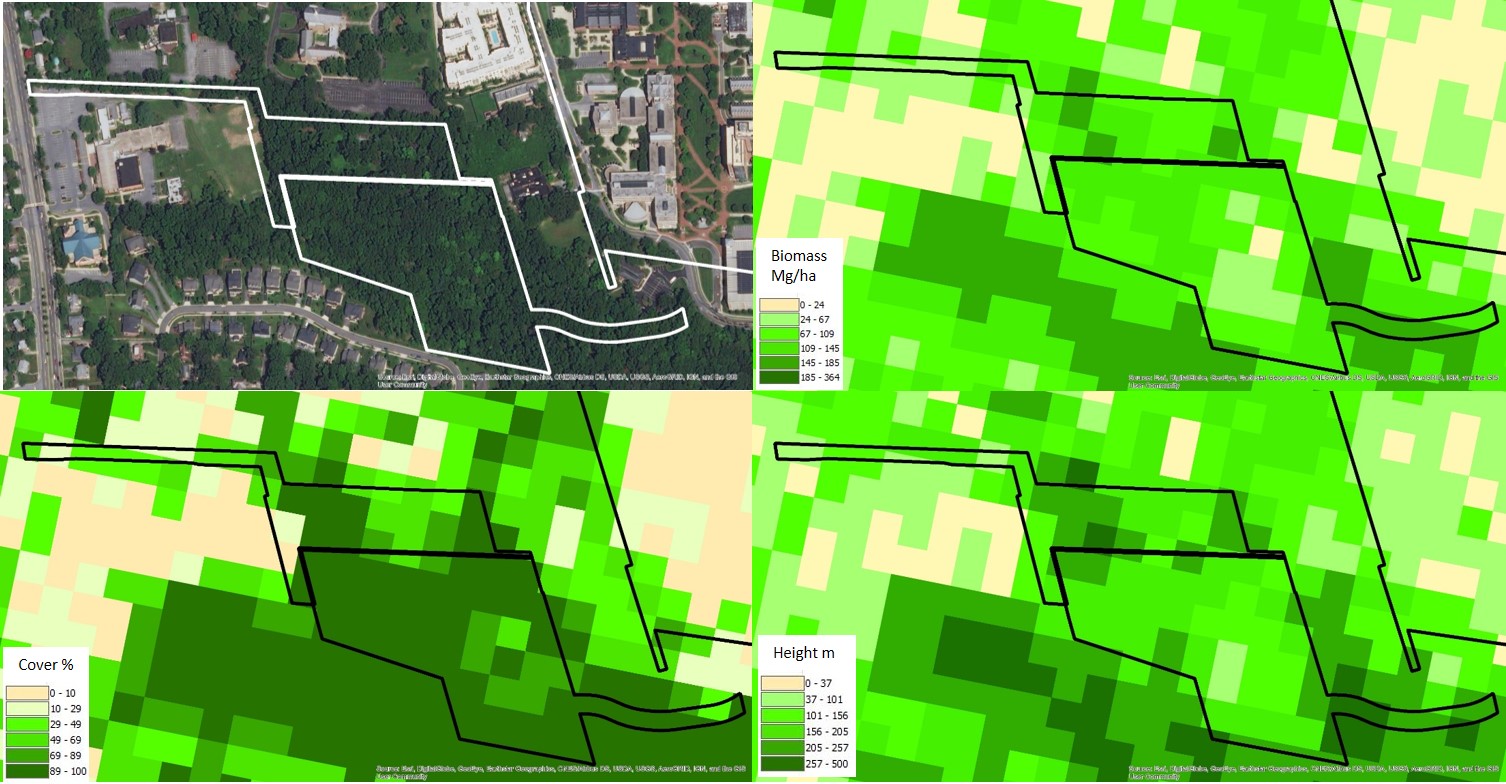
Figure 7. location of Guilford Woods (top left), UMD (lower right part) and Gilbane Development (upper left). Biomass (top right), tree canopy cover (bottom left) and average height (bottom right)
In 2011, the University section had 1,292 Mg of carbon and the adjacent Gilbane property had 657Mg (in CO2 equivalents (Table 2). These figures include above and below ground components, although the belowground amounts use a simple approximation. Not included is the large amounts of C stored in soil microorganisms.
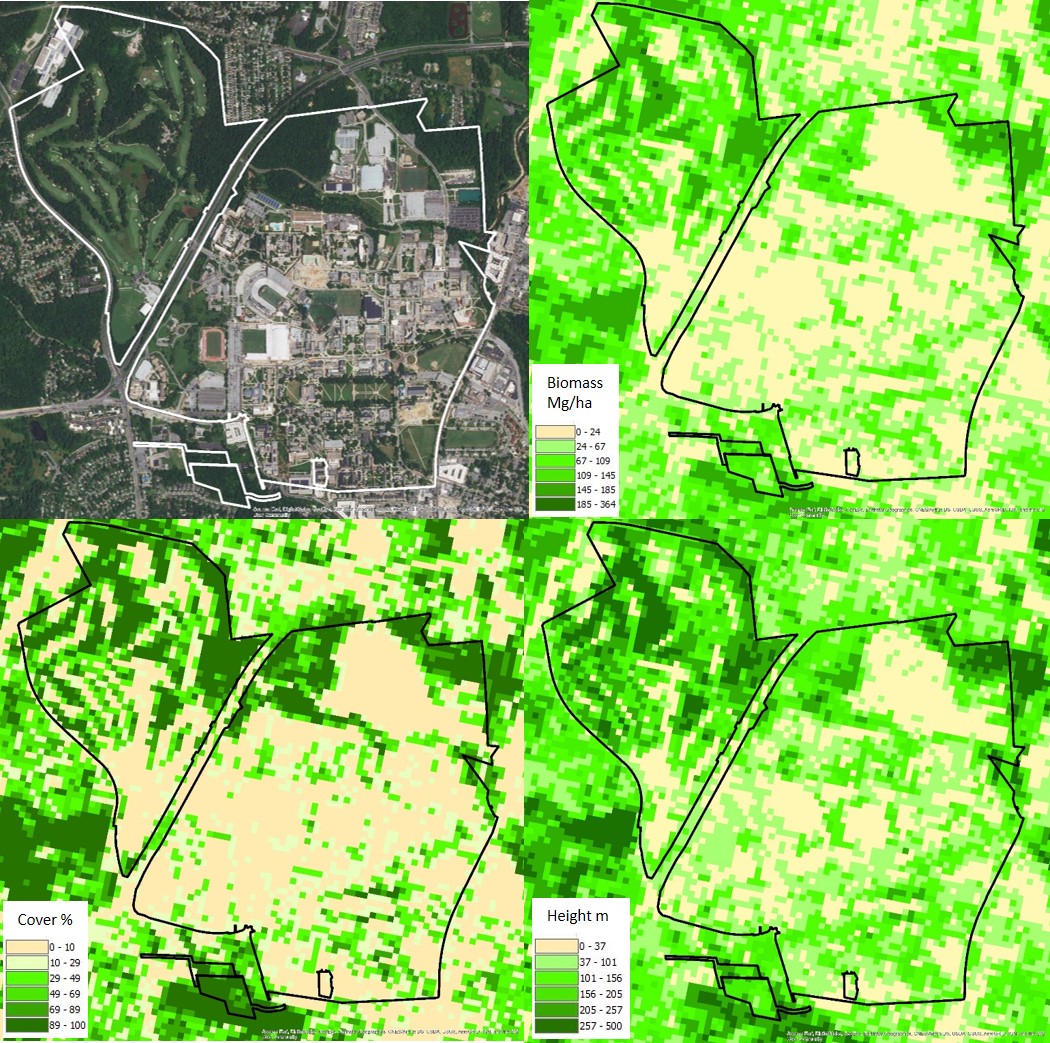
Figure 8. Forest biomass, tree canopy cover and average canopy cover on the main campus, Golf Course and Guilford Woods. Inset shows location of larger map 30m x 30m. For data sources see Table 2.
The level of maturity of the forest has been assessed by counting the number of grid cells in the forest in which the total of tree biomass exceeded 75 Mg/ha (Table 3). For the UMD part of the Woods there were 38 cells (90%) whereas, for the campus, the values were 384 cells (15%). Thus, on average, the trees in Guilford Woods have much greater cover. The distribution of carbon in biomass is shown in Figs 7 and 8. Tree height is another proxy measure of maturity (Tables 2, 3).
1.2.4. Tree canopy cover
The distribution of tree canopy cover is shown in Figs 7 and 8. The cover in the UMD part of Guilford Woods (Fig.9) was 94% of the ground area. The value for the Gilbane property was 66% (Table 2). The University campus tree cover was 23% and the Golf Course, 49%. Clearly, Guilford Woods was almost entirely closed forest. Guilford Woods constitutes 28% of the forest cover on the University campus (Fig 8). Another way to find the relative maturity in the Woods compared with the rest of the area, is to count the number of grid cells in which the cover equals or exceeds a threshold (Table 3). Using a threshold of 60%, 13 grid cells (90% of the area of the Woods) were found in the UMD part and 256 cells (15%) for the entire Campus (Table 3).
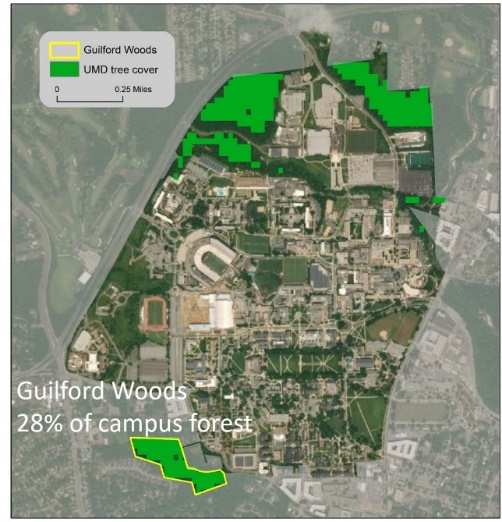
Figure 9. Existing forest in Guilford Woods (outlined in yellow) and on the University campus. Guilford Woods is 28% of the total remaining forest on the campus.
1.2.5. Comparison of tree heights in woods and parkland on the University Campus.
Canopy height is related to the age of the forest. The average height of trees in the cells over the Woods in UMD’s part was 17.9m (59ft) and 17.2m (57ft) in Gilbane’s part. The Campus and golf course were, respectively, 7.7m (25ft) and 16.4m (54ft) (Table 2). In the Woods, 100% of the trees were taller than 10m (34ft) and 29% taller than 20m (66ft) (Table 3). These are very high values. The equivalent values for the Campus were 50% and 8% respectively. The tree heights on the Campus and neighboring areas is shown in Figs 2 and 3
1.3. The location of the forest is important
Some species need larger areas of suitable habitat than exist in a single patch (Table 4} because the margins of the patch may be unsuitable - the “edge effect” (Figs 10, 11a, c). Thus, if the forest has non-forested edges, the core forest is smaller than its edges and, in smaller forest patches, there may be no core area (Fig.11). Guilford Woods is large enough to have some core area.
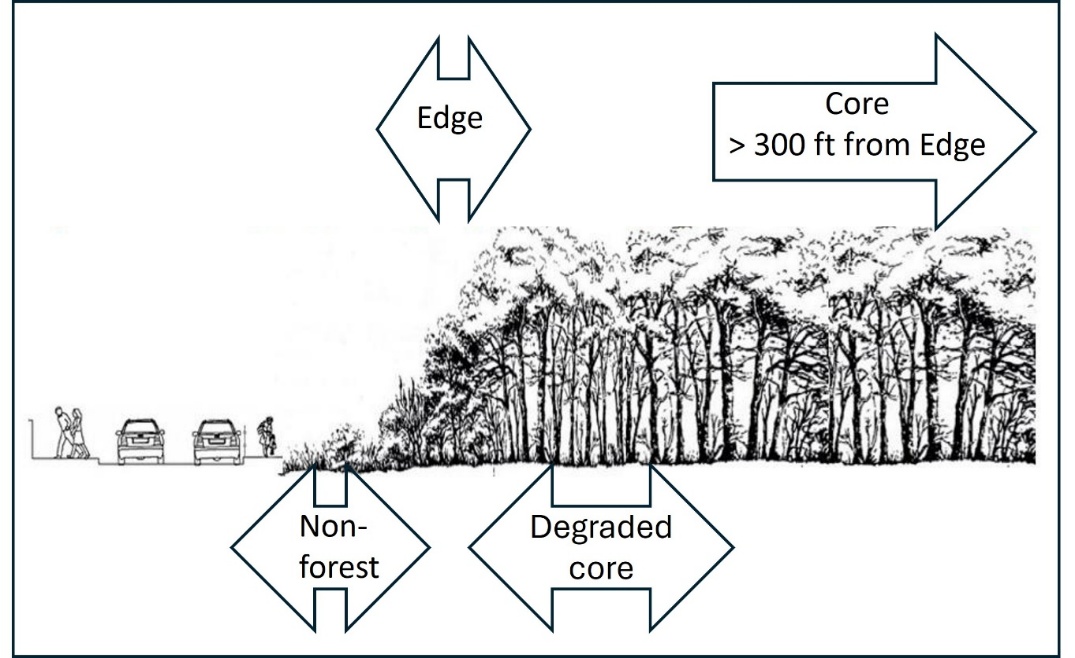
Figure 10. The edge effect. The environment in the residual forest core is quite different from the degraded core and Edge.
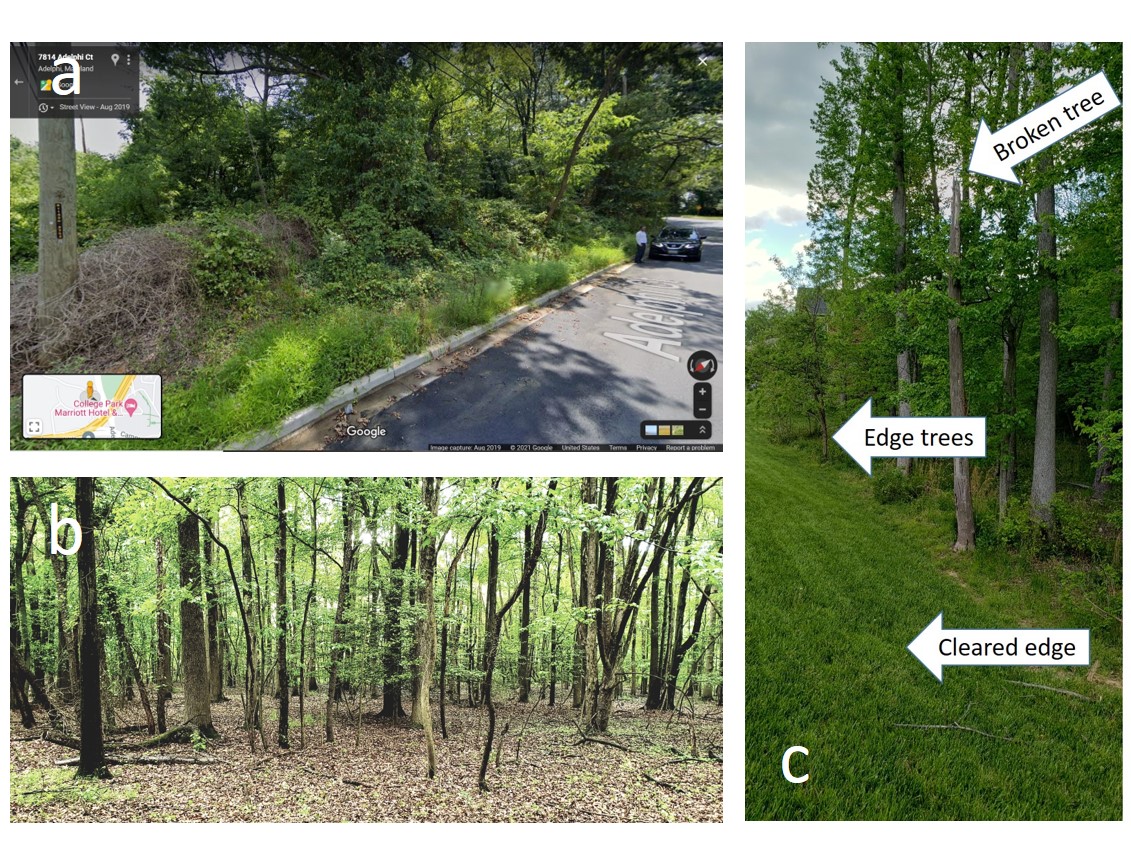
Figure 11. (a) Forest edges are composed of scrub and small trees, often overgrown with vines. The forest species cannot regenerate in this zone. (b) A degraded forest edge along Windsor Lane where part of Guilford Woods was cleared before 2010, showing a damaged forest interior (core) tree.
If a smaller core cannot support a wide-ranging species but the forest patch is part of a corridor of “stepping-stones” between isolated patches, then the single, small patch may be adequate for wider-ranging species if they connect neighboring areas of habitat, thereby compensating for the inadequate sizes of one patch alone. However, if a segment is removed at some point, the gap may exceed the threshold over which a species may be unable or unwilling to cross. Thus, any loss of part of a network of stepping-stones can lead to extirpation of those species from not only the one forest, but also an entire region. Thus, natural habitats that form corridors are important in fragmented landscapes
|
Dispersal |
|
Search of new territory, habitats |
|
Local movements, such as daily foraging |
|
Venturing outside the home range in search of mates and suitable habitat |
|
Migration - large scale movement |
Table 4 Some of the needs provided by stepping-stones between nearby natural areas for birds and animals that normally need large areas.
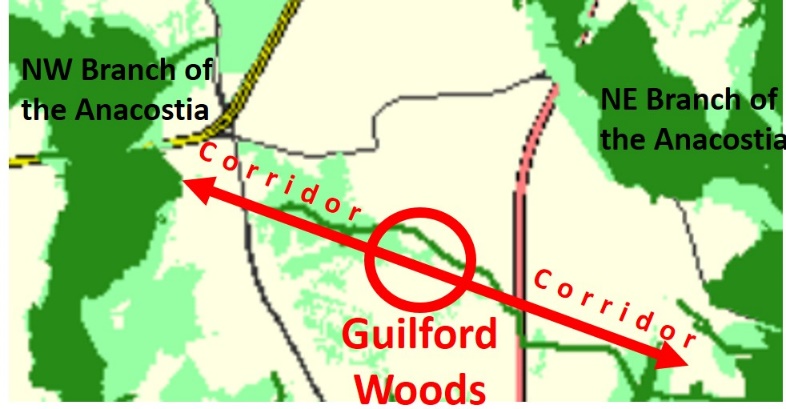
Figure 12. Guilford Woods is part of a 2-mile chain of patches of natural habitats (“stepping-stones”) stretching between the Northwest and Northeast Branches of the Anacostia River. This is recognized in the University’s Facilities Master Plan for 2011-2030 in which Guilford Woods as an integral part of the Regional Open Space Framework (Master Plan pp 34 -35).
1.4. People need forest
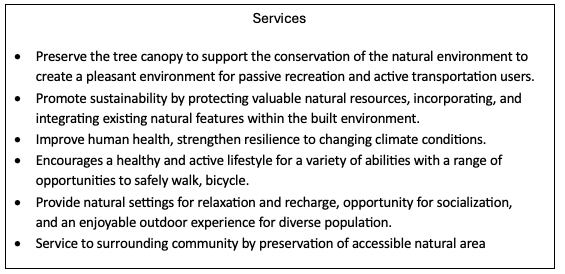
Table 5. Some benefits of natural areas
A truly natural area, not recently disturbed, provides a unique experience available to the University community, residents, and even visitors from elsewhere who could easily reach the forest via the Blue Line light rail. Proximity to the Campus is important since it is unrealistic to expect a student or a neighborhood resident to travel beyond walking distance for a casual walk. The nearest other natural area is Greenbelt Park, 5 miles away.
2. Biodiversity
2.1. Species diversity
The current lists of species shows that Guilford Woods is remarkably diverse for its size, location and history. It includes birds (e.g., pileated woodpeckers, barred owls, red-shouldered hawks), mammals (e.g., bats, raccoons, deer, foxes), insects, reptiles, amphibians and plants.
|
Species by taxonomic group |
Numbers recorded (All confirmed by experts) |
|
Arthropods |
33 |
|
Arachnids (spiders) |
5 |
|
Amphibians |
3 |
|
Birds |
26 |
|
Mammals |
6 |
|
Reptiles |
3 |
|
Fungi (+ slime molds) |
24 (+3) |
|
Plants |
85 |
|
Mollusk |
1 |
Table 1. Major taxonomic groups of known species in Guilford Woods recorded by iNaturalist (iNaturalist, https://friendsofguilfordwoods.weebly.com/).
An analysis of the taxonomic groups includes a wide variety of types of biota (Table 1). Overall, the plant list has 85 species of which 26 are trees (Table 2). An increase can be expected as new species are found -particularly of insects (arthropods). Few species are invasive aliens, as defined in the USDA National Invasive Species Information Center (https://www.invasivespeciesinfo.gov/what-are-invasive-species). Species that are “alien” in the Woods does not mean they have no value: many have adapted to the woodland habitat and contribute to, or even replace, ecosystem services formerly provided by natives. Most of the troublesome nonnatives in Guilford Woods such as English Ivy and Japanese honeysuckle can be controlled. This applies to some native species as well that have increased well beyond fully natural numbers and impinge on the habitats for species more closely matching balanced ecosystems. A prime example is greenbrier (Smilax rotundifolia).
|
Tree List for Guilford Woods |
|
|
red maple sweetgum tulip tree American beech willow oak white oak northern red oak southern red oak pin oak black gum river birch black cherry catalpa sugar maple |
flowering dogwood American holly pawpaw box elder silver maple sycamore black walnut eastern cottonwood American persimmon elm hickory American hornbeam American strawberry bush northern spicebush |
Table 2.Trees of Guilford Woods. (from Friends of Guilford Woods https://friendsofguilfordwoods.weebly.com/
While the Woods as a whole do not meet Maryland criteria for Old Growth status (i.e. >150 yrs old), there is a 90-year-old sweet gum, a 135-year-old white oak, and several 150-year-old tulip trees (dating back to around the time of the Civil War.) The locations of some of the “specimen” trees, are shown on an NRI map from 2009 (Fig. 1), and their sizes (Table 3).
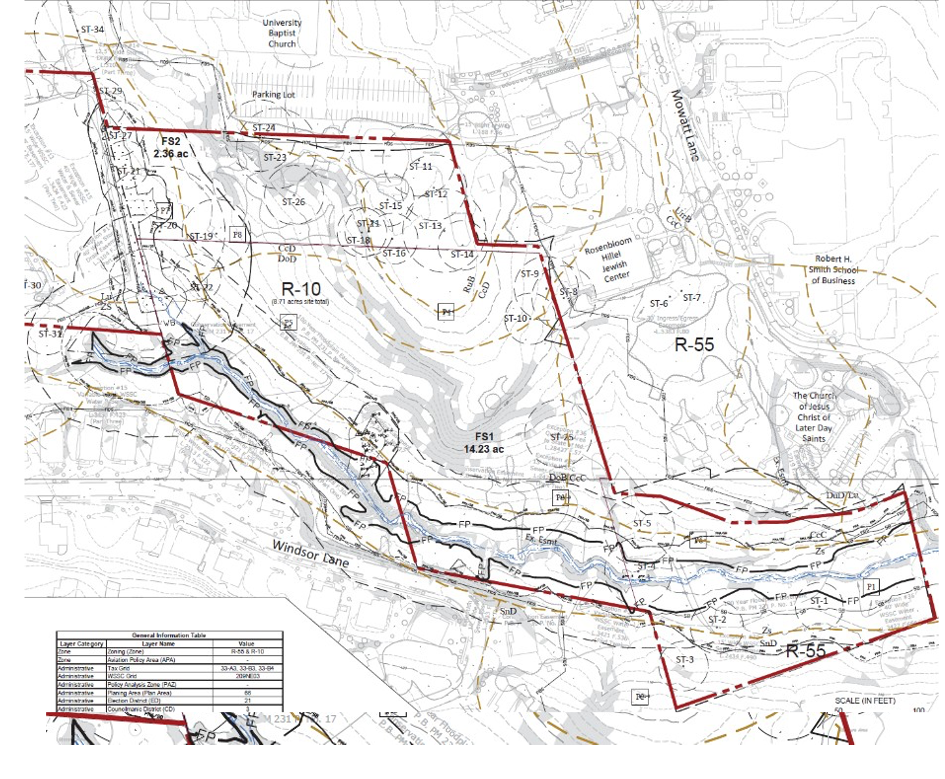
Figure 1. Natural Resource Inventory map (2009) showing the locations of some of the larger individual trees (labelled ST#). Key to species abbreviations in Table 3. Soil types labeled “R#”.
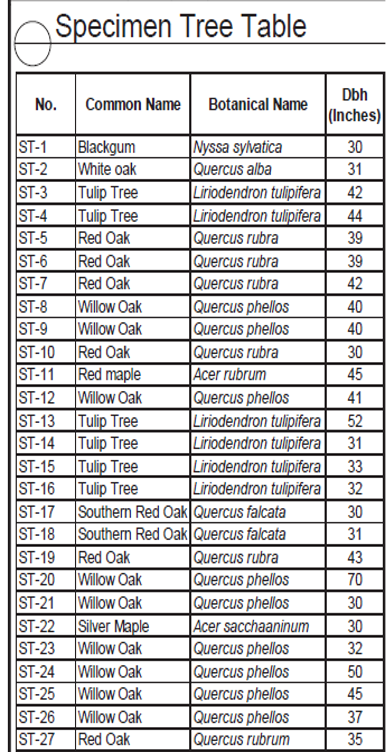
Table 3. Natural Resource Inventory (2009) showing diameter at breast height (dbh) of the larger individuals trees. See Fig.1 for locations.
The Woods enhance biodiversity well beyond its boundaries. It is a refuge - home base - for species that visit the University campus and surrounding neighborhoods. For example: bats, red-shouldered hawks, and owls fly out from the Woods over the neighborhood. These and other species may be lost if their forest refuge were to be lost.
2.2. Habitat diversity
2.2.1. Woodland
Guilford Woods, unlike other areas of UMD natural areas have different environments, habitats and, in turn, distinct communities and species living there.
In suburban settings like Guilford Woods, the typically small residual forest patches often have little “Core” (Fig.2) needed for forest interior dwelling species (FIDS). The State of Maryland forest ordinance defines the Core as more than 300 feet from the forest boundary.
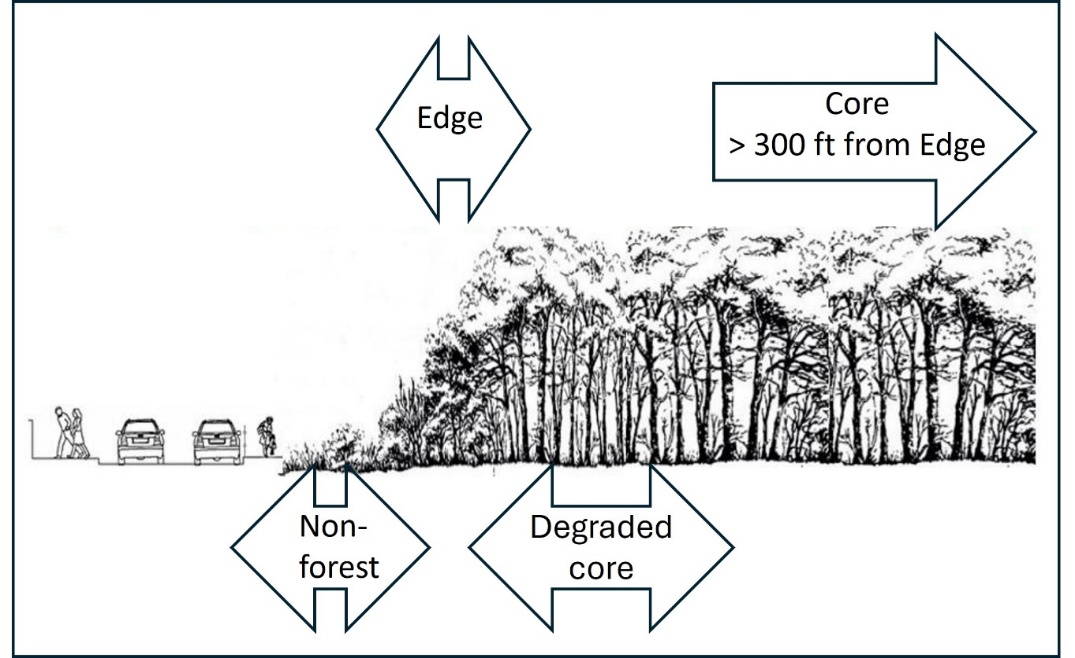
Figure 2. Forest edge zonation.
Destruction of the forest is caused, most often, by encroaching development. Trees in the core lose the protection of the edge forest, lose vigor, and cannot regenerate (Fig. 2). Exposed edges less than 300ft are too narrow to preserve the core habitat conditions, leading to the loss of some critical FIDS. Disturbed areas at the edge of the forest are typically too small to support viable populations of FIDS wildlife.
Newly cleared forest rapidly deteriorates into zones of bushes, saplings of small, short life-cycle trees and herbaceous cover typical of disturbed land – quite different from the original Core forest. However, there is interest in this process of degradation for its own sake and worthy of study since it is so common in suburban regions.
Guilford Woods does have some core areas (approximately 20,000 square yds), enhanced by surrounding, privately owned woodland. Most of the old (some more than 100yrs) trees in Guilford Woods are in the Core.
2.2.1.1. Tree canopy cover
The distribution of tree canopy cover is shown in Figs 7 and 8. The cover in the UMD part of Guilford Woods (Fig.9) was 94% of the ground area. The value for the Gilbane property was 66% (Table 2). The University campus tree cover was 23% and the Golf Course, 49%. Clearly, Guilford Woods was almost entirely closed forest. Guilford Woods constitutes 28% of the forest cover on the University campus (Fig 8). Another way to find the relative maturity in the Woods compared with the rest of the area, is to count the number of grid cells in which the cover equals or exceeds a threshold (Table 3). Using a threshold of 60%, 13 grid cells (90% of the area of the Woods) were found in the UMD part and 256 cells (15%) for the entire Campus (Table 3).
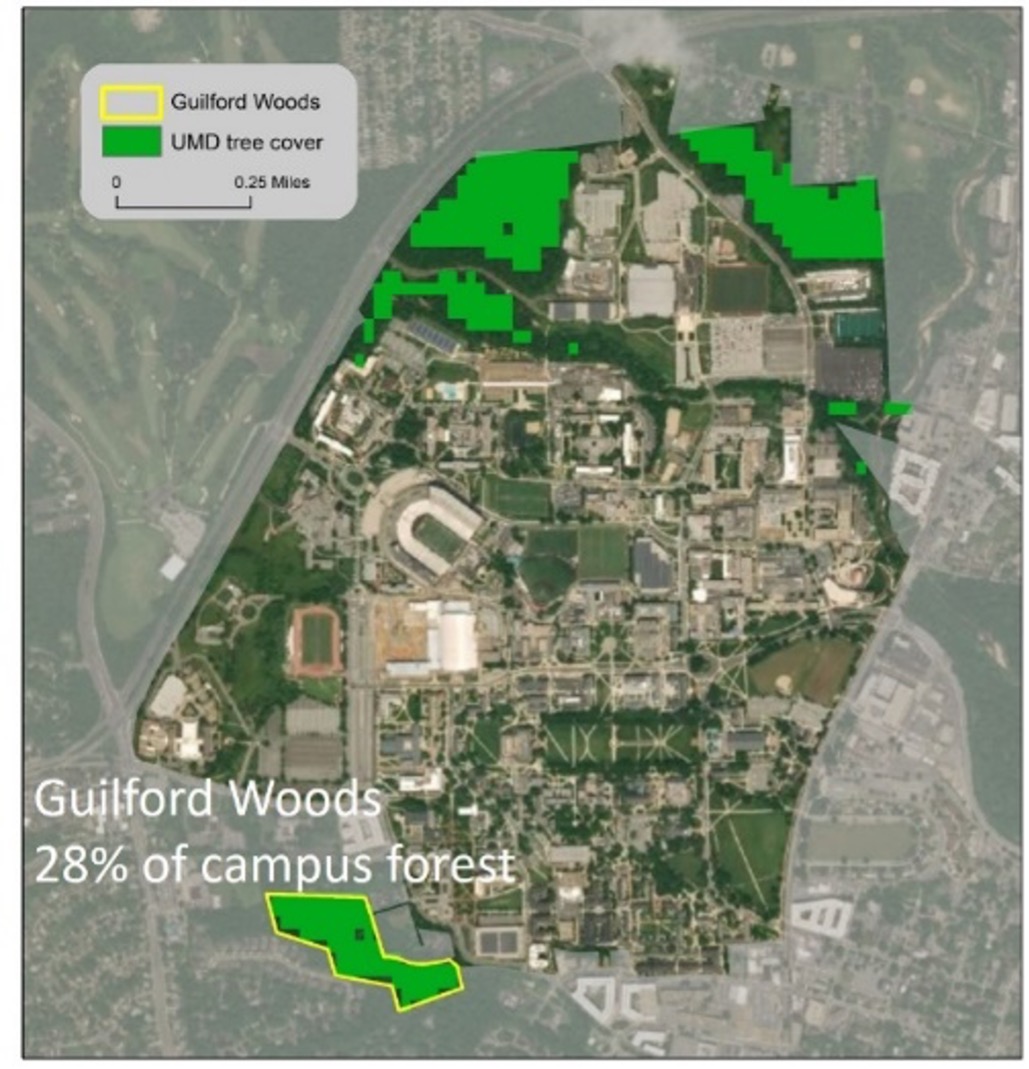
Figure 9. Existing forest in Guilford Woods (outlined in yellow) and on the University campus. Guilford Woods is 28% of the total remaining forest on the campus.
2.2.1.2. Tree canopy heights
Comparison of tree heights in Woods and parkland on the University Campus.
Canopy height is related to the age of the forest. The average height of trees in the cells over the Woods in UMD’s part was 17.9m (59ft) and 17.2m (57ft) in Gilbane’s part. The Campus and golf course were, respectively, 7.7m (25ft) and 16.4m (54ft) (Table 2). In the Woods, 100% of the trees were taller than 10m (34ft) and 29% taller than 20m (66ft) (Table 3). These are very high values. The equivalent values for the Campus were 50% and 8% respectively. The tree heights on the Campus and neighboring areas is shown in Figs 2 and 3
2.2.2. Other habitats
Creek
Riparian woodland
Grassy glades
Wetland (wooded)
Neighboring suburban woodlands and cultivated grassland
2.2.3 Soils
The vegetation types in the Woods have strong association with soil type. The properties of the soils differ (Fig. 3, Table 4) and, as a result, the proximity of different topography and soils is probably responsible for some of the diversity in the Woods. (see chapters on topography and habitats).
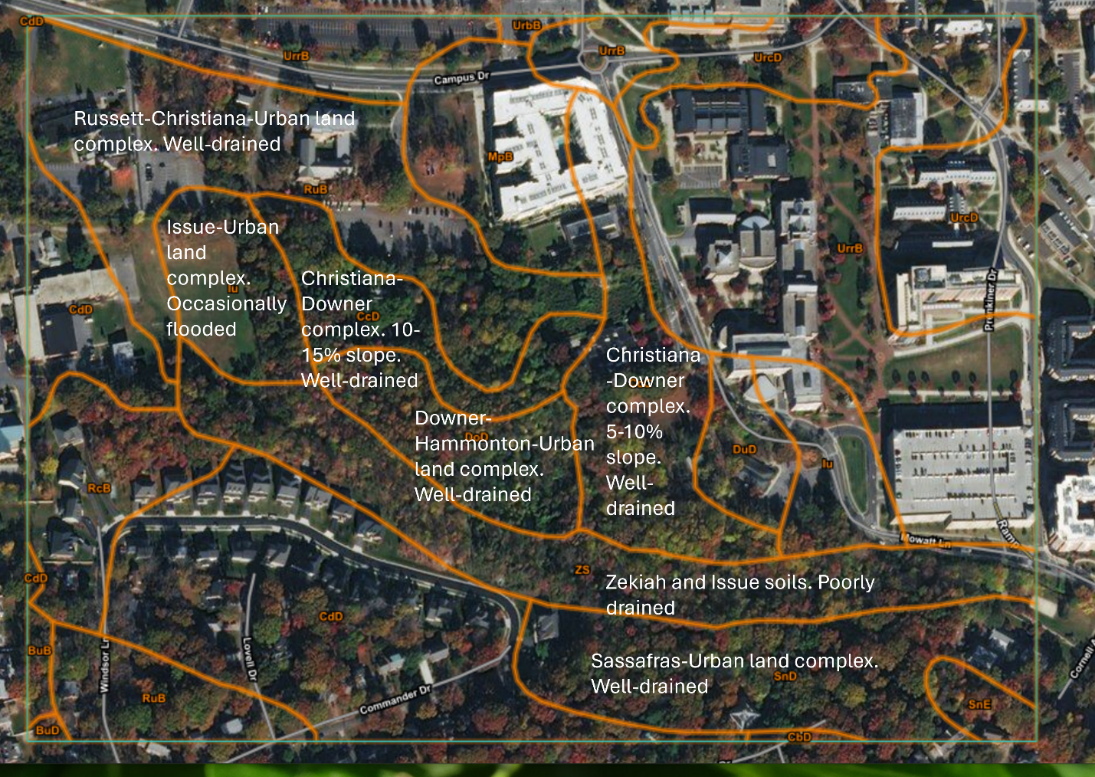
Figure 3. Soils of Guilford Woods. For details of soil properties see Table 4.
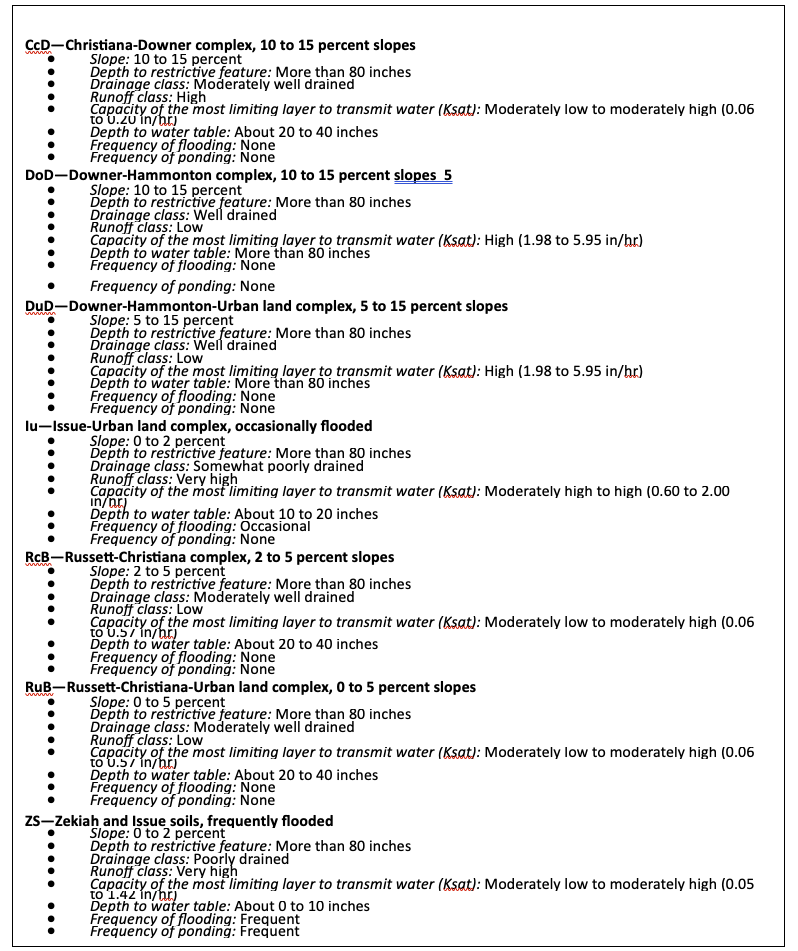
Table 4. Properties of Guilford Woods soils (see map in Fig.2)
3. Non-material benefits
Guilford Woods is a natural environment that provides non-material necessities for human well-being. Recreation, tranquility, aesthetics, and inspiration (Figs 1, 2) are essential “ecosystem services”. These are in addition to physical environmental benefits such as climate regulation, water purification, stormwater drainage, nutrient cycling, carbon fixation, habitat for birds and animals.
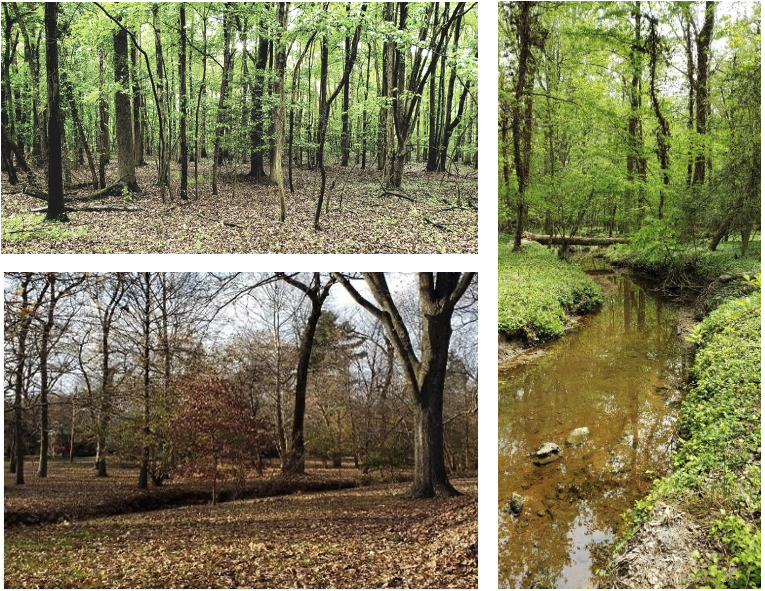
Figure 1. Guilford Woods - tranquility and beauty
3.1. Health

Research confirms that spending time in nature boosts human psychological health and well-being and even improves physical health and learning . The Diamondback student newspaper (June 17, 2021), quoted a student, Lucie, who said she goes there (to the Woods) when she’s stressed; where she finds “the gurgling sound of the running water and the rustling leaves provide a sense of peace.” (Fig 1)
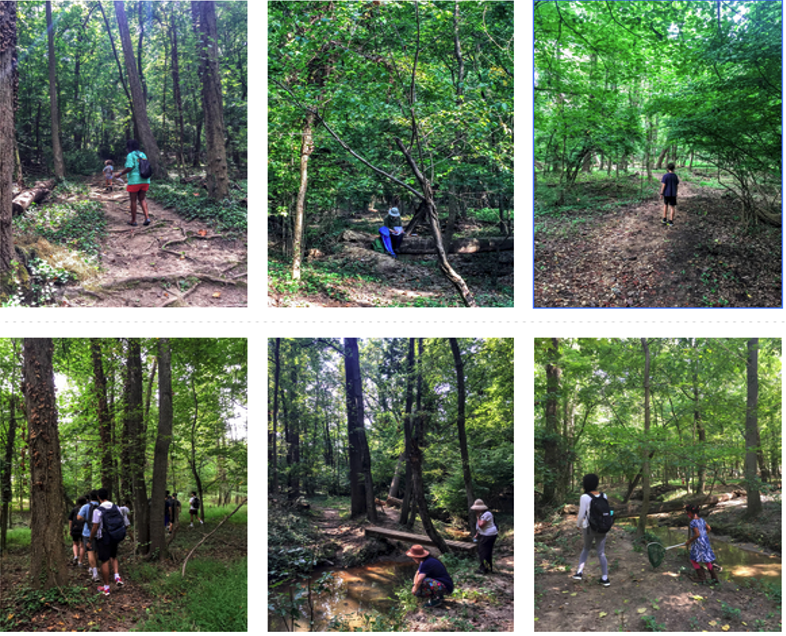
Figure 2. Research confirms that spending time in nature boosts physical and psychiatric health.
3.2. Education
Guilford Woods offer invaluable educational opportunities for local children (Fig.5). Children from nearby schools visit the woods to learn about ecology and nature. Many studies have shown that access to nature is vital for kids and even boosts academic performance.
Forests accessible from the University Campus are used for teaching students (Fig. 5). Twelve years ago, it was estimated that, each year, approximately 2,500 students in classes in environmental science, civil engineering and fine arts, visited Campus forests for instruction. The nearest alternative is 5 miles away which, because of class scheduling, cannot be visited in class time, and therefore cannot replace instruction on Campus. Chemists, physicists, engineers and others have teaching laboratories, and environmental sciences are no different, except the need for natural locations. Although several Faculty use Guilford Woods for their classes and several prominent researchers have been considering GW as a research site, the Woods have, so far, been less used than other forests on Campus. This is because of difficulty of access - which could easily be remedied with improved and new paths. A Guilford Woods natural area will greatly increase the range of ecosystems available for teaching and research.
An undergraduate student remarked recently: “….as a Computer Science major with a concentration in Biology, these are not skills (ecological) that I taught myself, these are skills that I learned from the University of Maryland.”
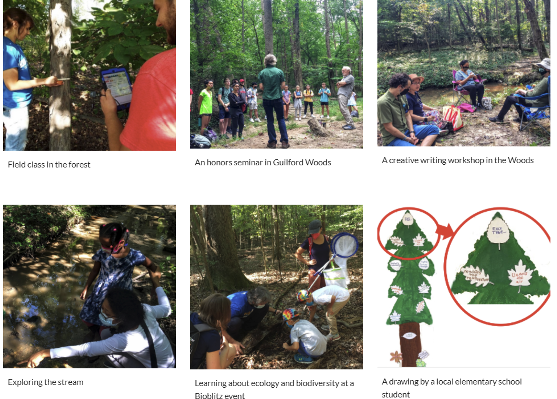
Figure 5. Some of the many non-material services provided by Guilford Woods
4. Guilford Woods Maps
- ^ See also an iNaturalist entry for the Woods: https://www.inaturalist.org/observations?place_ id=170700&subview=map and https://friendsofguilfordwoods.weebly.com
- ^ A “specimen” tree is defined by Prince Georges County as one having a diameter of 30 inches or more (Sect 25-118. definition #65, Charter for Prince George’s County Maryland. 2019 Edition/2020 Supplement of the Prince George's County Code, SUBTITLE 25. TREES AND VEGETATION). Using this definition, the NRI list in Table 6 shows 27 specimen trees.
- ^ Species with a tremendous capacity for reproduction and distribution which results in a negative impact on native plant species or environmental, economic, or public welfare priorities”.
- ^ 1 Species with a tremendous capacity for reproduction and distribution which results in a negative impact on native plant species or environmental, economic, or public welfare
- ^ Millennium Ecosystem Assessment, 2005. Ecosystems and Human Well-being: Biodiversity Synthesis. World Resources Institute, Washington, DC.
- ^ Samantha Waters, “A Dose of Nature. A New Study Finds Even Short Times Outdoors Have Therapeutic Effect on Mental Health.” Maryland Today, Feb. 26.