

My teaching philosophy is one of humility. It is important to remember that even as a teacher I continue to learn, especially from my students. I constantly learn new facets of my subject matter (e.g. climate change or sustainability) from students engaging me in dialogue and taking an active role in their learning process. For example, while teaching Climate, Land Use, and Sustainability (GEOG 415) I encouraged students to stay abreast of emerging research and news, not just covering the class subject matter, but beyond to topics such as politics, natural disasters, and economic patterns. I suggested that they look for connections with these topics and what was being discussed in class and was pleasantly surprised as the semester continued to have students adding insight, material, and debate to the course topics.
Ellicott, Evan
Bio
Dr. Ellicott is a geospatial scientist whose work focuses on transforming Earth observation data into actionable information for public safety and health. His research integrates satellite remote sensing, environmental science, and human systems to understand how natural hazards affect populations and to improve early warning capabilities.
Ellicott’s research began in wildfire science, where he worked extensively with satellite active fire detection and smoke characterization. Over time, his work has expanded toward hazard intelligence — developing methods that connect real-time environmental observations with the people and communities affected by them. He studies how hazards are detected, how exposure occurs, and how information can be communicated in ways that support decision-making.
He currently serves as the wildfire and geospatial data lead on a National Institutes of Health project examining the impacts of wildfire smoke exposure on maternal, neonatal, and infant health across the United States over the past two decades. He also collaborates with public health researchers to assess smoke exposure risks among medically vulnerable populations, including patients undergoing hemodialysis.
Dr. Ellicott previously led a NOAA Proving Ground and Risk Reduction project evaluating satellite fire detection products while building operational capacity across the wildland fire community. He aided in the detection design effort for the XPRIZE Wildfire challenge, focused on identifying incipient wildfires across large landscapes.
His broader goal is to develop integrated warning systems that extend beyond wildfire to multiple natural hazards, improving how environmental intelligence reaches communities, practitioners, and public health systems.
Degrees
Environmental Science, SUNY Albany - BS
Geography, SUNY Albany - BA
Geography, University of Maryland - Ph.D
GIS Graduate Certificate, University of Maryland - G.S.
Areas of Interest
- Satellite based estimates of fire radiative energy and associated biomass burning emissions
- Fire ecology and consequences of a changing climate
- Human health impacts of wildfires and other natural disasters
Research Topics
- Geospatial Information Science
- Geospatial Information Science and Remote Sensing
- Human Dimensions of Global Change - Coupled Human and Natural Systems
- Remote Sensing
I am interested in the application of geospatial technologies (e.g. remotely sensing, GIS, big data) to investigate the interactive and dynamic nature of landscape ecology and interactions with humans. Incorporating spatial analysis tools along with in situ measurements I am particularly interested in examining wildland fire. I also seek to understand how patterns of wildfire and land use may vary with climate change and anthropogenic influence.
- M. Boudreaux, M. Yoder, E. Ellicott, M. Passarella, S. Lorch (2025). Perinatal Resources and Wildfire Smoke. Medical Care. 63(6):396-404. DOI: 10.1097/MLR.0000000000002
- H. Song, M. Liang, N. Sieck, H. Lin, J. Raimann, P. Desai, F. Maddux, H. He, E. Ellicott, X. He, Q. Nguyen, X-Z. Liang, P. Kotanko, A. Sapkota (2025). The 2023 Canadian Wildfires and Risk of Mortality and Hospitalization Among U.S. Hemodialysis Patients. Kidney International. https://doi.org/10.1016/j.ekir.2025.04.00
- R. Gourevitch, E. Ellicott, C. Kim, M. Yoder, M. Passarella, S. Lorch, M. Boudreaux (2025). Non-Health Care Costs Associated with Neonatal Intensive Care Unit Visitation. Health Affairs Scholar, Volume 3, Issue 3, March 2025, qxaf043, https://doi.org/10.1093/haschl/qxaf043
- M. Maldarelli, H. Song, C. Brown, M. Situt, C. Reilly, A. Mahurkar, V. Felix, J. Crabtree, E. Ellicott, M. Jurczak, B. Pant, A. Gumel, Z. Zafari, W. D’Souza, A. Sapkota, B. Maron (2024). Polluted Air Spread by Remote Canadian Wildfires to the Eastern U.S. is Associated with Cardiopulmonary Disease. The Journal of the American Medical Association (JAMA) Open Network, 7(12); e2450759. doi:10.1001/jamanetworkopen.2024.50759
- T. Liu, F. Panday, M. Caine, M. Kelp, D. Pendergrass, L. Mickley, E. Ellicott, M. Marlier, R. Ahmadov, E. James (2024) Is the smoke aloft? Caveats regarding the use of the Hazard Mapping System (HMS) smoke product as a proxy for surface smoke presence across the United States. International Journal of Wildland Fire. https://doi.org/10.1071/WF23148
- N. Magliocca, E. Ellicott, M.L. Ingalls, M. Epprecht, C. Hett, V. Nanhthavong, A. de Bremond (2022) Spatio-temporal unevenness in local land system regime shifts caused by land deals in Lao PDR. Ecology & Society, 27(4), https://doi.org/10.5751/ES-13405-270407
- N. Magliocca, A. de Bremond, E. Ellicott, L. Seghezzo, C. Venecia, M. Jesús Moscario, C. Nolte (2022) Two of a kind? Large-scale land acquisitions and commodity frontier expansion in Argentina’s Dry Chaco. Ecology and Society 27 (2):25. https://www.ecologyandsociety.org/vol27/iss2/art25/
- Zubkova, M.; Giglio, L.; Humber, M.; Hall, J.H.; Ellicott, E. Conflict and Climate: Drivers of Fire Activity in Syria in the Twenty-First Century. 2021. Earth Interactions, 25(1): 119-135
- Lasko K, Vadrevu KP, Tran VT, Ellicott E, Nguyen TTN, Bui HQ, Justice C. 2017. Satellites may underestimate rice residue and associated burning emissions in Vietnam. Environmental Research Letters, 12(8), 085006.
- KP Vadrevu, I Csiszar, E Ellicott, L Giglio, KVS Badarinath, EF Vermote, C Justice. "Hotspot analysis of vegetation fires and intensity in the Indian region." IEEE Journal of Selected Topics in Applied Earth Observations and Remote Sensing. 6:224-238. 201
- W. Schroeder, E. Ellicott, C. Ichoku, L. Ellison, M. Dickinson, R. Ottmar, C. Clements, D. Hall, V. Ambrosia, and R. Kremens, (2014), Integrated active fire retrievals and biomass burning emissions using complementary near-coincident ground, airborne and
- J. McCarty, E. Ellicott, V. Romanenkov, and D. Rukhovitch, (2012), Multi-year black carbon emissions from cropland burning in the Russian Federation. Atmospheric Environment, 63, 223-238. doi: http://dx.doi.org/10.1016/j.atmosenv.2012.08.053.
- E. Vermote, E. Ellicott, O. Dubovik, T. Laypyonok, M. Chin, L. Giglio, and G. Roberts (2009), An approach to estimate global biomass burning emissions of Organic and Black Carbon from MODIS Fire Radiative Power, Journal of Geophysical Research, 114, D18
- E. Ellicott, E. Vermote, L. Giglio, and G. Roberts (2009), Estimating the total fire radiative energy emitted from biomass burning using MODIS, Geophysical Research Letters, 36, L13401, doi:10.1029/2009GL038581.
- E. Ellicott, E. Vermote, F. Petitcolin, and S. Hook (2009), Validation of new parametric model for atmospheric correction of thermal infrared data, IEEE Transactions on Geoscience and Remote Sensing, 47(1), p295-311.
- Krishna Prasad Vadrevu, Csiszar, I, Ellicott, E., Giglio, L., Badarinath, K.V.S., Vermote, E., and Chris Justice. Hotspot Analysis of Vegetation Fires and Intensity in the Indian Region. 2012. IEEE Journal of Selected Topics in Applied
- Krishna Prasad Vadrevu, Evan Ellicott, K.V.S. Badarinath and Eric Vermote.2011.MODIS derived fire characteristics and aerosol optical depth variations during the agricultural residue burning season, North India. Environmental Pollution.159, (6)1560–1569.
Campus - Research Faculty Chair
Campus - Mentor MS GIS students
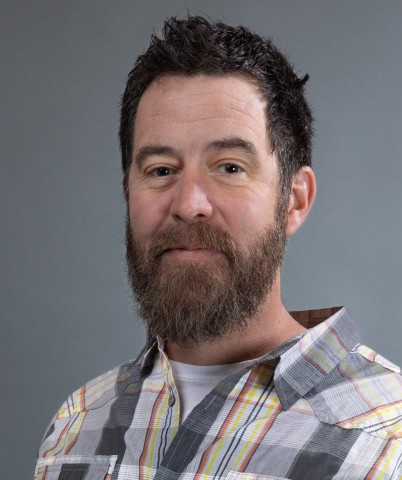
Evan Ellicott
Associate Research Professor
| 4600 River Rd, Suite 313 (send mail to 2181 LeFrak)
| ellicott@umd.edu
| (301) 405-5189
Accepting New Students No
Media Availability Yes
Speaking Topics Wildfires, natural disasters, smoke, human health