

Study: Wildlife Trade Raises Risk of Disease Spread to Humans
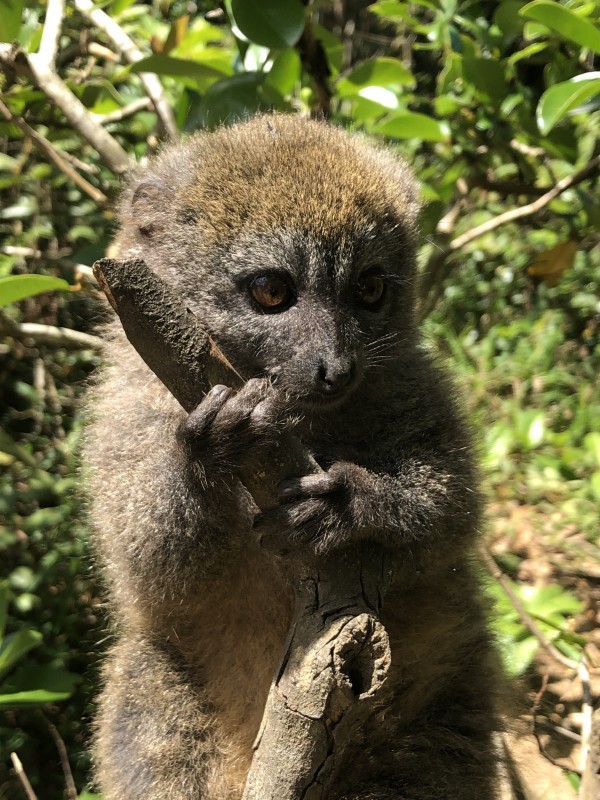
Professor Meredith Gore Helps Find That Traded Mammals Are More Likely to Share Pathogens With Humans
From lemurs to fennec foxes, wild animals are bought and sold around the world—legally and illegally, dead and alive—including as pets, for food and for traditional medicinal uses. This global, multibillion-dollar trade is increasing the risk of diseases spreading between animals and humans, according to a new study coauthored by a University of Maryland researcher.
The findings from Department of Geographical Sciences Professor Meredith Gore and colleagues at the University of Lausanne in Switzerland were published in Science. Using four decades of legal and illegal trade data alongside host-pathogen records, the team found that traded wild mammals are 1.5 times more likely to share infectious agents with humans than species not involved in trade.
The risk is even higher for animals that are traded illegally or sold live, which is often the case for exotic animals being traded as potential pets. Growing demand for exotic pets, often fueled by social media, has expanded the range of species in circulation, whether otters or sugar gliders. A major outbreak of monkeypox outside Africa, for instance, was linked to a trade in Gambian giant pouched rats and rope squirrels for pets.
“Illegal wildlife trade enables novel opportunities for pathogens like these to make incursions at global scales, crossing boundaries that were previously barriers to disease movement and linking urban and rural places and their residents in new ways,” said Gore.
The study also found that time in trade matters: On average, a species shares one additional pathogen with humans for every decade it has been present on the market.
While the researchers say that the risk to consumers is usually not direct; exposures often occur before the products are purchased.
“It is important to understand that the probability of being infected by playing a piano with ivory keys or wearing fur is almost nonexistent. The problem lies at the beginning of the chain: Someone had to hunt the animal, skin it, transport it,” said the study’s lead author, Jérôme Gilpert from the University of Lausanne.
Still, consumer behaviors are key contributors to the risks of the wildlife trade, said Cleo Bertelsmeier, research team leader at the University of Lausanne.
“Even if the danger is not immediate, our consumption choices indirectly fuel the transmission of pathogens to humans,” she said.
The researchers say the results underscore how environmental change, species loss and ecological disruptions contribute to public health risks, and called for stronger biosurveillance of wildlife and animal products to detect emerging infectious threats. Existing international agreements regulating wildlife trade largely focus on preventing species extinction, not disease transmission, they point out.
Reducing opportunities for contact between humans and traded wildlife, they argue, will be key to lowering the risk of future outbreaks.
“Models predicting pathogen risk or spread may be inaccurate if they fail to account for trade dynamics, particularly those that are illegal. Such errors can result in inefficient use of limited resources for surveillance or management, particularly in low resource contexts.” said Gore. “Wildlife trade is a mechanical vector of infectious agents that has until now received relatively little attention by the public health community.”
Paper: Gippet, J. M. W., Carlson, C. J., Klaftenberger, T., Schweizer, M., Eskew, E. A., Gore, M. L., & Bertelsmeier, C. (2026). Wildlife trade drives animal-to-human pathogen transmission over 40 years. Science, 392(6794), 178–182. https://doi.org/10.1126/science.adw5518
Image: A Bamboo lemur at Ranomafana National Park, Madagascar, photographed by Meredith Gore in 2023.
Published on Thu, 04/09/2026 - 16:28