

Complications Lurk Behind Surging Interest in Biofuels, Land-Use Expert Says
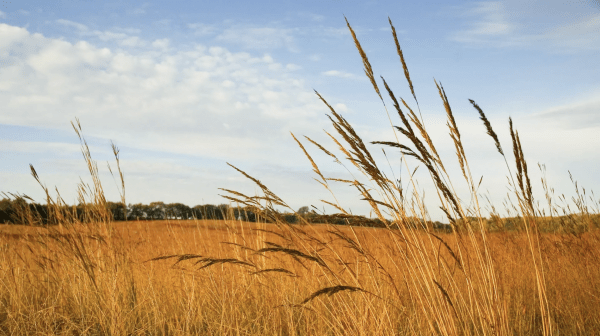
Associate Research Professor Louise Chini is studying switchgrass to understand tradeoffs involved in farmers increasingly growing the crop as a raw material for biofuel.
Louise Chini was bumping down a dirt road in a rented SUV, searching for tall plants amid fallow farmland when the vehicle suddenly veered into a weed-obscured ditch. The resident farmer kindly used a tractor and chain to extricate the University of Maryland associate research professor of geographical sciences, who after her rescue posed a question: Was there any switchgrass nearby?
The farmer responded that he’d turned his Northwest Pennsylvania cornfield into a switchgrass field in recent years and sold his latest crop to a seed producer. His answer told Chini, who studies land-use modeling and climate mitigation, all she needed to know during that trip two summers ago: Switchgrass was not only being cultivated in this region as a possible energy source, but it was displacing crops mainly grown for food.
The current blockade of the Strait of Hormuz is prompting oil-dependent nations to look increasingly to biofuels like ethanol and biodiesel. While the biofuel industry’s focus has traditionally been on food crops like corn or beans, scientists have more recently looked to “second-generation” biofuels that come from other vegetation in hopes of protecting global food supplies.
Read the full story in Maryland Today
Photo of tallgrass by iStock in Maryland Today
Published on Wed, 04/01/2026 - 09:33