

Associate Research Professor Joanne Hall Leads Global Field Campaigns to Track Crop Residue Burning
NASA-backed research collects U.S. and India data to improve emissions estimates and guide remote sensing analysis.
Associate Research Professor Joanne Hall organized three crop residue burning field campaigns in summer and fall 2025 as part of her NASA Carbon Monitoring System (CMS) project aimed at improving crop residue burning and emission estimates for the EPA’s National Emissions Inventory (NEI).
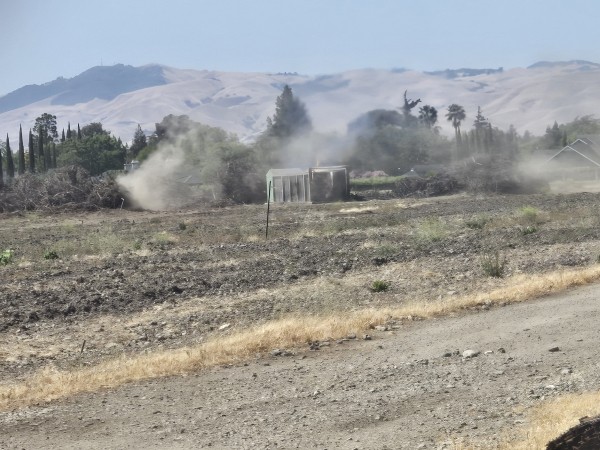
The first campaign focused on orchard and vineyard pile burns in Livermore, California [main image], a burn type specifically requested by EPA stakeholders as a new category for the U.S. NEI.
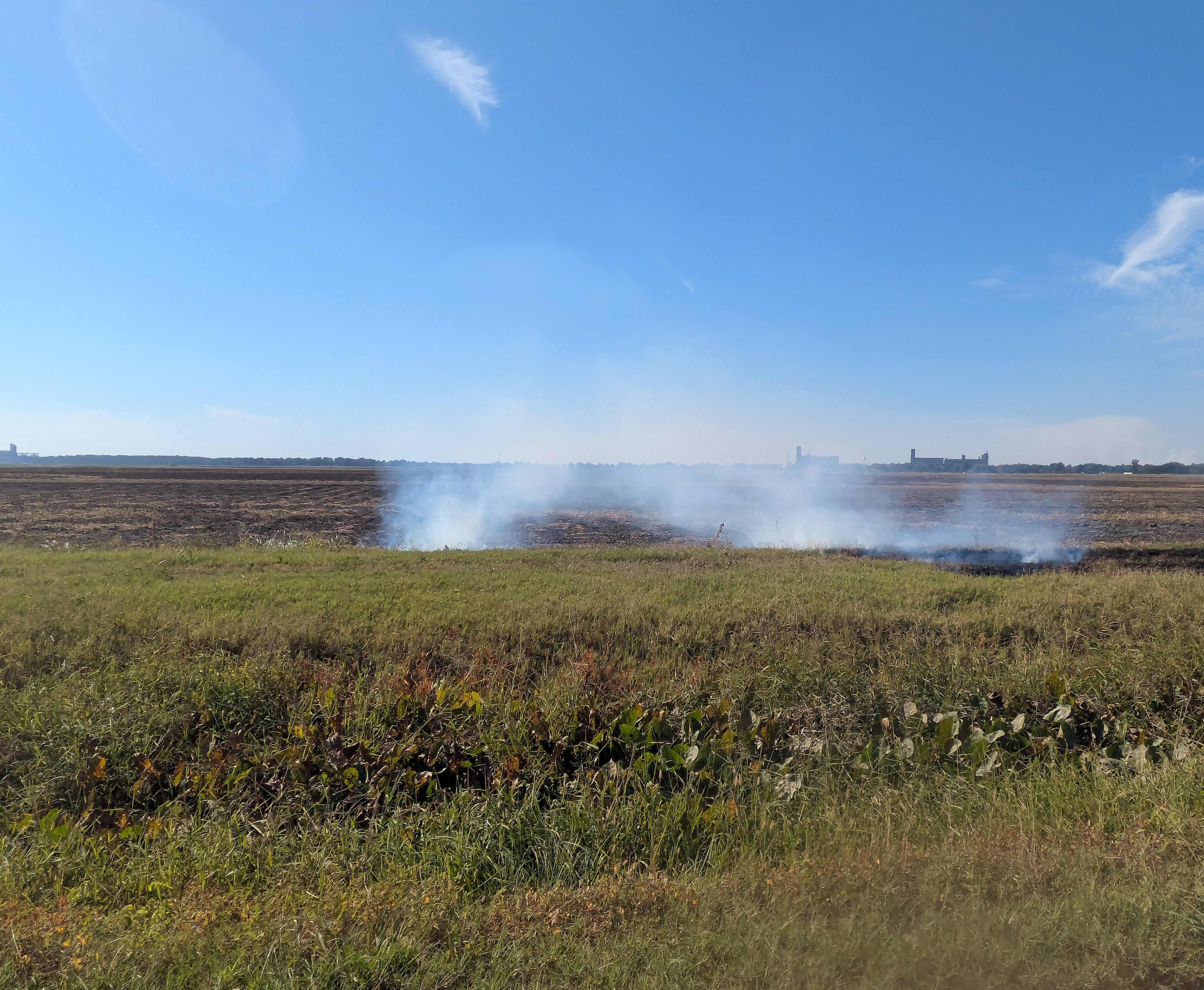 Targeted burning in Jonesboro, Arkansas
The second campaign targeted burning in predominantly corn- and rice-producing areas near Jonesboro, Arkansas, where more than 400 roadside field surveys and several in-depth supersite observations were conducted to assess crop management practices influencing burning emissions.
The final campaign, funded by MittiLabs Inc. through a separate grant, examined rice residue burning in Punjab and Haryana, India.
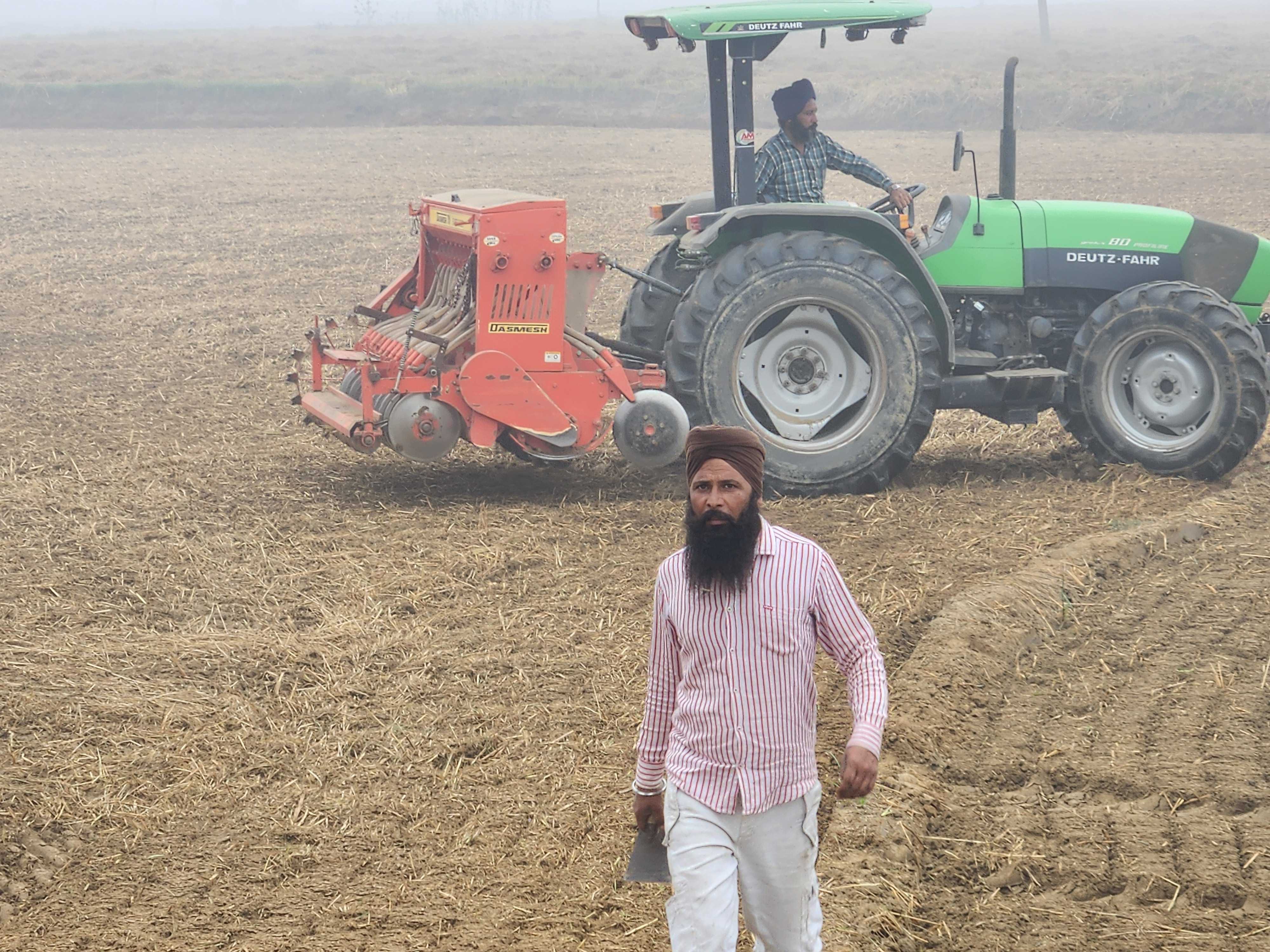 Targeted burning near Punjab, India
Data collected across these campaigns support the training and validation of Hall’s various cropland burned-area products and guide ongoing remote sensing analysis. Year two of the project will include additional fieldwork to further refine remote sensing methodologies and incorporate validation of the resulting crop residue emissions estimates.
All images courtesy of Joanne Hall. Credit: J. McCarty; N. Torbick; I. Mondragon; field team members
Published on Thu, 12/11/2025 - 15:59