

AI Can Help Predict Food Crises, but Experts Advise Caution
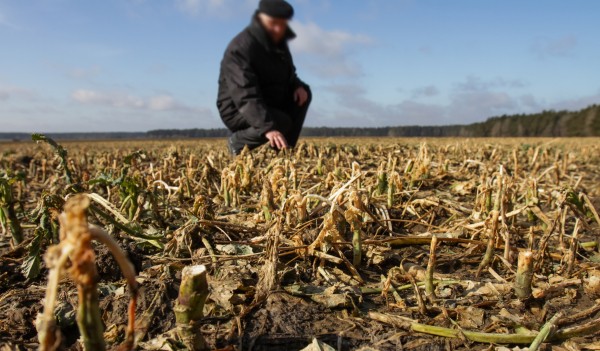
UMD researchers warn that relying on algorithms alone to forecast famine risks costly errors in conflict zones and data-poor regions.
As humanitarian aid budgets shrink and AI capabilities rapidly advance, artificial intelligence is increasingly seen as a fast, cost-effective way to forecast where food insecurity may emerge. But an international team of experts is urging aid organizations to use AI selectively and keep human experts in the loop.
In a new commentary published in Nature Food, geographical scientists at the University of Maryland and colleagues describe how AI and machine learning can help collect and analyze the vast amounts of information used to monitor food security, from satellite imagery and crop data to market prices and conflict reports. But they caution that AI models can struggle in data-poor environments, miss new threats, and fail to recognize unreliable or manipulated information.
Weston Anderson, the commentary’s lead author and an assistant research professor in UMD’s Department of Geographical Sciences (GEOG), said the warning comes as humanitarian organizations face growing pressure to use AI to reduce costs.
“Over the past year and a half, funding for humanitarian aid has been cut repeatedly, putting tremendous pressure on food security early warning systems to use machine learning and artificial intelligence to reduce costs,” Anderson said. “During this time, the capabilities of AI have dramatically increased. This presents both an opportunity and a potential pitfall for acute food security early warning systems.”
Food security early warning systems help governments and humanitarian organizations identify populations at greatest risk and determine where assistance is most urgently needed. Systems such as the Famine Early Warning Systems Network (FEWS NET), the Integrated Food Security Phase Classification and the World Food Program’s HungerMap Live draw on information ranging from satellite observations and climate data to crop yields, food prices and reports from the field.
The authors recommend expanding these uses, particularly in areas where large amounts of structured data are available, such as remote sensing, climate and crop forecasting.
“AI is already strengthening food security early warning systems, from analyzing satellite imagery at scale and mapping croplands to improving crop yield and climate forecasts and making complex data more accessible,” said NASA Harvest Co-Director Inbal Becker-Reshef, a GEOG research professor, managing director of Microsoft AI for Good Lab and co-author of the commentary.
“Rapid advances in AI could contribute much more, particularly when tools are developed in close partnership with domain experts and shaped by the analysts who use them.”
The challenge is using AI to directly predict acute food insecurity.
Food crises are shaped by complex and changing factors, including conflict, markets, weather and migration. Historical data are also limited in many regions, making it difficult to train models to recognize the full range of conditions that can contribute to a crisis.
“Food security early warning systems operate in constantly-changing, data-poor environments,” Anderson said. “These systems are often asked to evaluate novel threats and reconcile conflicting information.”
As the authors mention, an example from East Africa in 2022 illustrates the limitations of relying on quantitative data alone. Some households were experiencing the most severe form of acute food insecurity, but available statistically representative data did not capture the severity of the crisis. Analysts recognized shortcomings in the Household Hunger Scale and incorporated additional information, including reports of household debt, livestock sales and livestock body conditions.
Only by combining those sources was the severity of the crisis recognized at an early stage, Anderson said. Without human expertise, the crisis would have been detected much later.
The authors also caution that data can be unreliable or intentionally manipulated, particularly in conflict zones. Human analysts can assess the credibility of sources and reconcile conflicting information in ways an automated system can’t.
Rather than replacing human judgment, the authors recommend using AI to augment the work of food security analysts. AI tools could, for example, help analysts search decades of FEWS NET reports using natural-language queries to identify historical situations that resemble an emerging crisis.
“The opportunity is to strengthen and modernize these complex systems, not replace them with a single AI model,” said Becker-Reshef.
Becker-Reshef adds that effective early warning depends on expert analysts who can reconcile conflicting evidence, understand local context and remain accountable for the final assessments and forecasts.”
“AI can be a powerful means of modernizing food security early warning systems, but when lives and livelihoods are at stake we need transparent methods with proven skill, independent evaluation and human judgment,” Anderson said.
Paper: Anderson, W., Becker-Reshef, I., Bodanac, N., Carneiro, B., English, D., Hoell, A., Hoffine, T., Liu, Y., Machefer, M., Meroni, M., Raleigh, C., Tatem, A. J., Trigwell, R., Vesco, P., & Vos, R. (2026). Responsible use of artificial intelligence and machine learning for food security early warning systems. Nature Food. https://doi.org/10.1038/s43016-026-01400-6
Image: Farmer inspects dry crops in a field on a sunny day in early spring. Credit by Vital in Adobe Stock
Published on Wed, 08/26/2026 - 14:45