

Seminar: Advances and Applications in Space-Based Fire Tracking
Join us for this seminar on Friday, Oct. 9 at noon in River Road 301 and on Zoom.
While wildland fire is critical for many fire-adapted ecosystems, emerging extremes in fire behavior are threatening communities and ecosystems in the United States. Understanding how the behavior of individual wildfires responds to changes in climate, fuel availability and suppression practices requires large scale empirical records of fire behavior.
To this end, researchers have reconstructed a record of 12-hourly fire spread for all wildfires detected within the contiguous U.S. between 2012-2025, using VIIRS active fire detections and the Fire Events Data Suite (FEDS) algorithm. The comprehensive scope of this dataset is useful for evaluating fire spread models, understanding the drivers of extreme and episodic fire growth, and informing projections of fire risk under climate scenarios.
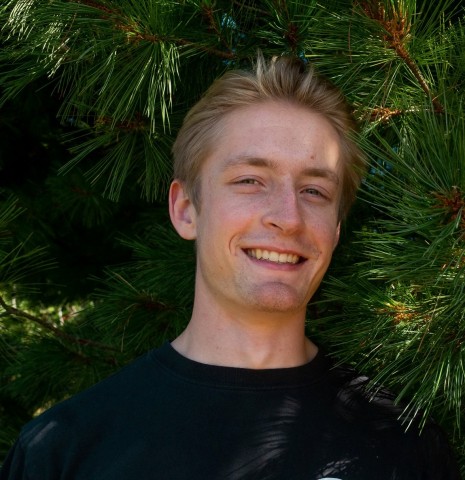
In this presentation, Zeb Becker (ESSIC) will share the results of FEDS validation work, a survey of the temporal aspects of contemporary U.S. pyrogeography, and a look at current and future applications of the sub-daily fire tracking approach.
Speaker Bio
Zeb Becker is a faculty assistant at the Earth System Science Interdisciplinary Center (ESSIC) at the University of Maryland and a member of the Wildfire Tracking Lab at NASA’s Goddard Space Flight Center.
He holds a bachelor's degree in Computer Science from Bowdoin College and previously worked as a wildland firefighter for the Washington State Department of Natural Resources.
His research focuses on wildland fire tracking using satellite and airborne active fire detection data and its use in decision support for fire management, with support from NASA's FireSense program.
Location: 4600 River Road, room 301 or Zoom.
For the Zoom link, please visit the GEOG Department Calendar.
When:
to:
Where:
River Road, Room 301 and Zoom
Host:
Tatiana Loboda, GEOG Professor & Chair
Speakers:
Zeb Becker, Faculty Assistant, Earth System Science Interdisciplinary Center.